
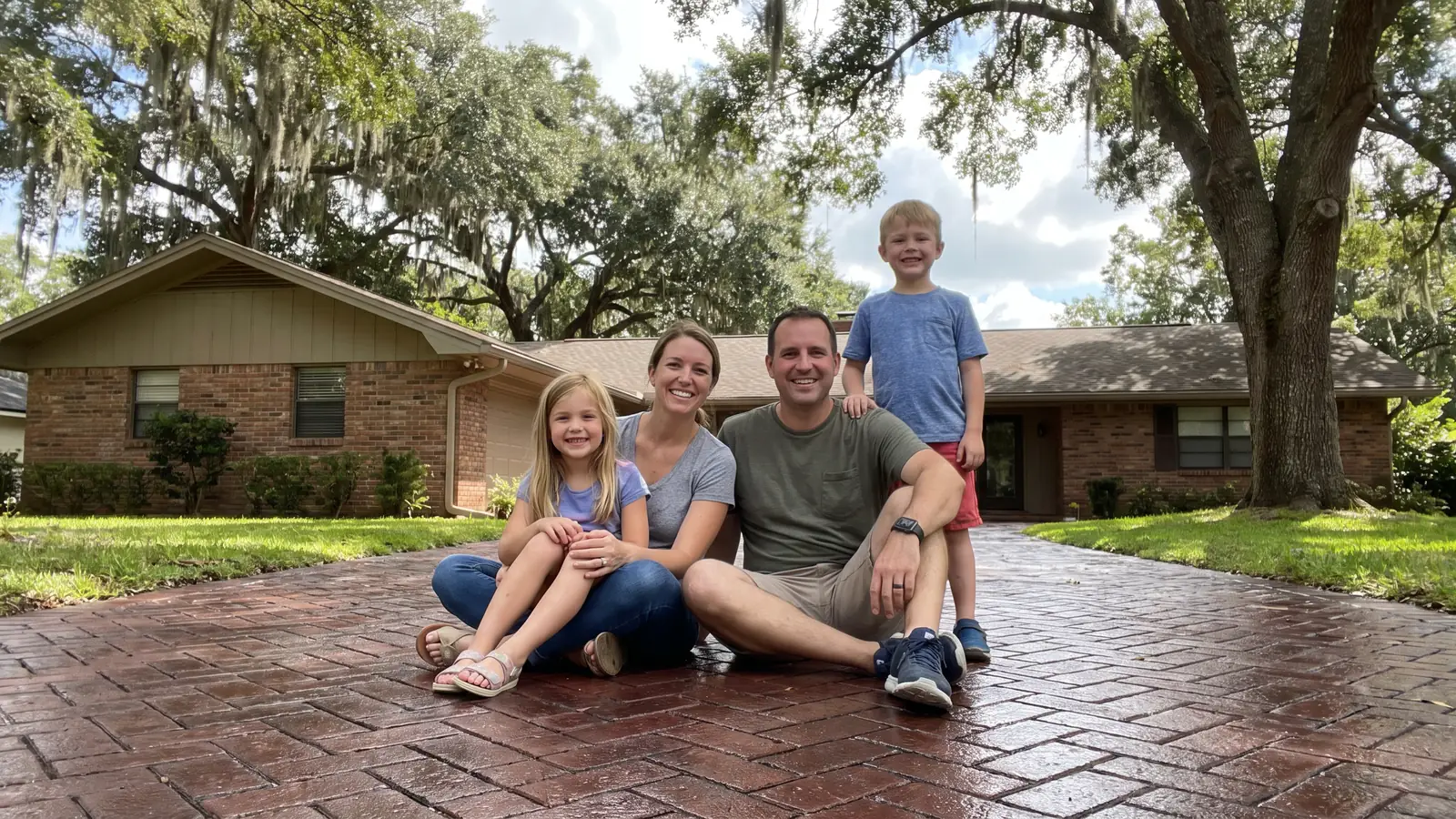
Paver sealing for Middleburg homes
Paver Sealing in Middleburg, FL
Middleburg has more than doubled since 1990, so new pavers are common; call (904) 204-0884 for a free estimate.
- Brings out deeper paver color
- Fresh joint sand helps lock pavers in place
- Gives weeds less room to grow
- Makes the surface easier to keep clean
- Free estimate, no obligation
Request a Free Estimate
Free, no obligation.
Fast, careful paver sealing in Middleburg
Paver sealing is available across Middleburg, from the historic streets near Black Creek to the newer subdivisions along Blanding Boulevard. A local contractor cleans, re-sands and seals long drives, walkways, patios and pool decks, with a free estimate first. A call to (904) 204-0884 gets a reply within 1 business day, usually much sooner.
Maybe your long driveway has faded to a chalky tan, with gaps where joint sand used to be and orange streaks near the sprinkler heads. Once the pavers are washed, re-sanded and sealed, the color evens out again. If you would like to start online, you can ask for a free estimate.
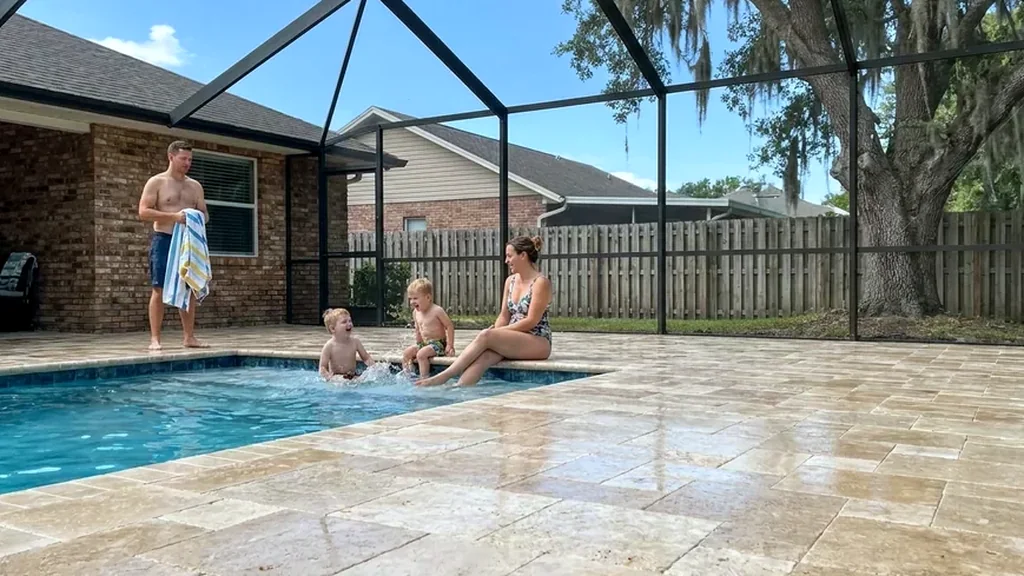
Why hire a local paver sealing contractor in Middleburg?
Middleburg homeowners lean on a local paver contractor because the lots are big, the ground is sandy and some homes run on well water. To hear how that changes a job on your property, ask for a free estimate.
Free look at a big lot
The contractor measures your Middleburg drive, walks and patio at no charge, then gives a price before you agree.
A range to hold bids against
A clean, sand and seal is posted in this region at $1.75 to $3.25 per square foot. Compare any quote to that.
Color that holds up
UV can fade unsealed concrete pavers within 3 to 5 years. Ask which finish keeps your color and how often to recoat.
You decide
You choose the date and the finish, and the estimate carries no obligation. Replies come within one business day.
Get Your Free Estimate in Middleburg
Tell us about your pavers in Middleburg.
Free, no obligation
What paver problems show up most in Middleburg?
Long drives and wide aprons add up
A local real estate guide says Middleburg lots are larger than those in Orange Park or Fleming Island, with acreage tracts on the western and southern edges. Bigger lots usually mean longer drives and more walkway, whether the home sits near Blanding Boulevard or well back from County Road 218. That is more area to wash, re-sand and seal. Walk both edges of a long drive and look for loose or low pavers. Edges are where sand escapes first, and a loose edge lets the whole run shift. Tell the contractor about any spot that moves underfoot.
Orange streaks from well water
The same guide notes larger-lot homes on well and septic, and UF/IFAS reports that iron runs high in most Florida well water. Irrigating with it can leave orange streaks on pavers and walls. A Northeast Florida paver company says rust and embedded stains may remain visible after treatment. The contractor pre-treats the marks, and aiming spray heads off the pavers helps stop new ones. Metal furniture left on pavers can leave the same kind of rust ring. Moving it before the visit shows the real surface.
Sandy, dry ground that loses joint sand
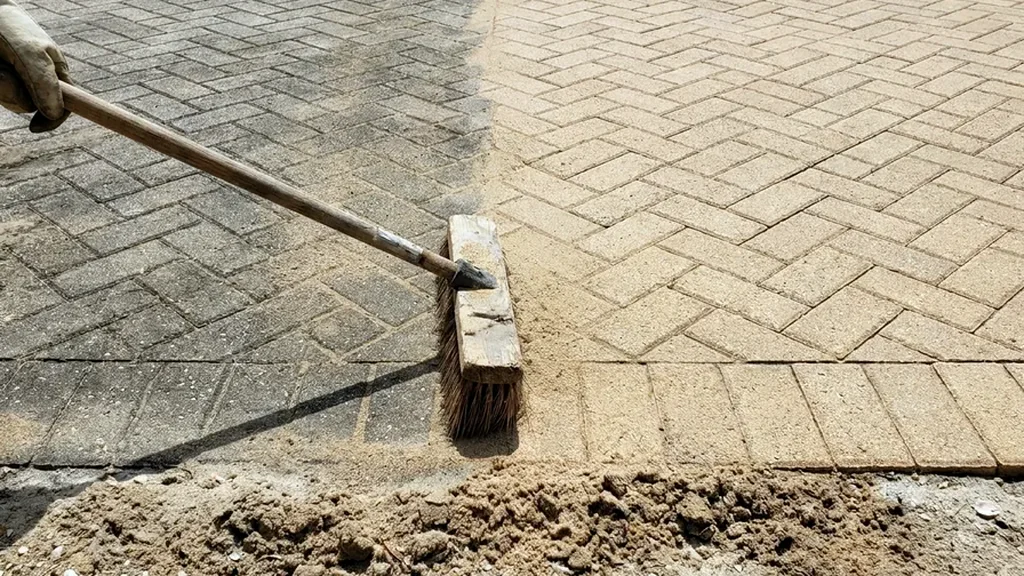
A Clay County horticulture agent wrote that sites in the county are generally sandy, dry and low in organic matter. Jacksonville's normal rainfall is 53.4 inches a year, much of it in summer downpours, and nearby Jennings State Forest holds sandhill habitat, a sign of the sandy soil. One company says a summer storm can carry joint sand out, and that weeds and ants in the joints mean the joints are empty. Sand goes back in before sealing, and the surface is swept so the joints sit tight. Full joints hold the pavers tight and keep weeds and ants from moving in. On sandy ground, that sand is the first thing to go.
New pavers that are not ready for a coat
Middleburg grew from 6,223 people in 1990 to 12,881 in 2020, and the First Coast Expressway added new exits there. Subdivisions such as GreyHawk and The Ravines have closed sales along Blanding, County Road 218 and Tynes Boulevard. New pavers need time before a first coat so white mineral haze can surface. One St. Augustine company says wait about 60 to 90 days, and a Jacksonville company says 30 to 60. Sealing too early can trap that haze. A short wait is cheap, and a cloudy coat is not. If your pavers went in this year, ask about timing before booking.
Dirt left by Black Creek flooding
After Irma in 2017, Black Creek crested at 28.5 feet, passing a record from 1923, and about 1,200 homes were in the flooded area. One resident lost a well pump and water heaters even though water never reached the living space. Pavers near the creek may hold dirt that has to be washed off first. If your lot took water, tell the contractor, because sealing waits until the surface is clean and dry. Lost joint sand is replaced after the wash. A quick check of the low edge of the drive shows how much work remains.
Where in Middleburg do you live, and does that change the paver job?
It can, because Middleburg mixes different kinds of housing. A local guide describes larger-lot homes on well and septic, newer subdivisions along Blanding Boulevard, County Road 218 and Tynes Boulevard, and manufactured homes and acreage tracts toward Keystone Heights. A new subdivision driveway and a rural drive have different sand, base and sealer histories. Say which one you have when you ask for a free estimate.
Subdivisions in recent sales include Corsair, Foxmeadow, GreyHawk, The Ravines, Black Creek Park and Jennings Farm, and Quails Hollar has 67 homes built from 1987 to 2003. In the older ones, pavers may be 20 years old or more, while in the newest they may still be curing. Call (904) 204-0884 and give the subdivision name.
The Middleburg Historic District covers 60 acres near Black Creek, including Main Street, Wharf Street and Palmetto Street. Historic homes sit beside older walks, so a contractor takes care with rinse water near wood and brick. Older walks may also have settled in places. Check with the county about any rules for your address, then ask for a free estimate.
What does paver sealing cost in Middleburg?
In this region the posted range is $1.75 to $3.25 per square foot for a clean, sand and seal. Because Middleburg lots are larger, a drive and walk can total more area than a typical subdivision lot, so the bill can climb even at a low rate. Bigger jobs spread setup time over more surface and cost less per square foot. For a total on your lot, ask for a free estimate.
Several things push the number up. A failed old coat must be stripped first, rust and stains add treatment time, and travertine or natural stone needs different sealer chemistry. Dips from a washed-out base need repair before sealing. Call (904) 204-0884 and describe the surface so the contractor can say what applies.
| Paved area | Typical example | Clean, sand and seal |
|---|---|---|
| 300 sq ft | Small patio or walkway | $525 to $975 |
| 600 sq ft | Two car driveway | $1,050 to $1,950 |
| 1,000 sq ft | Large driveway or pool deck | $1,750 to $3,250 |
| 1,500 sq ft | Driveway plus pool deck | $2,625 to $4,875 |
Math based on the $1.75 to $3.25 per square foot that Northeast Florida paver companies published as of November 2026. Your contractor sets the actual price after seeing the surface. Repairs, leveling and stripping failed sealer are usually extra.
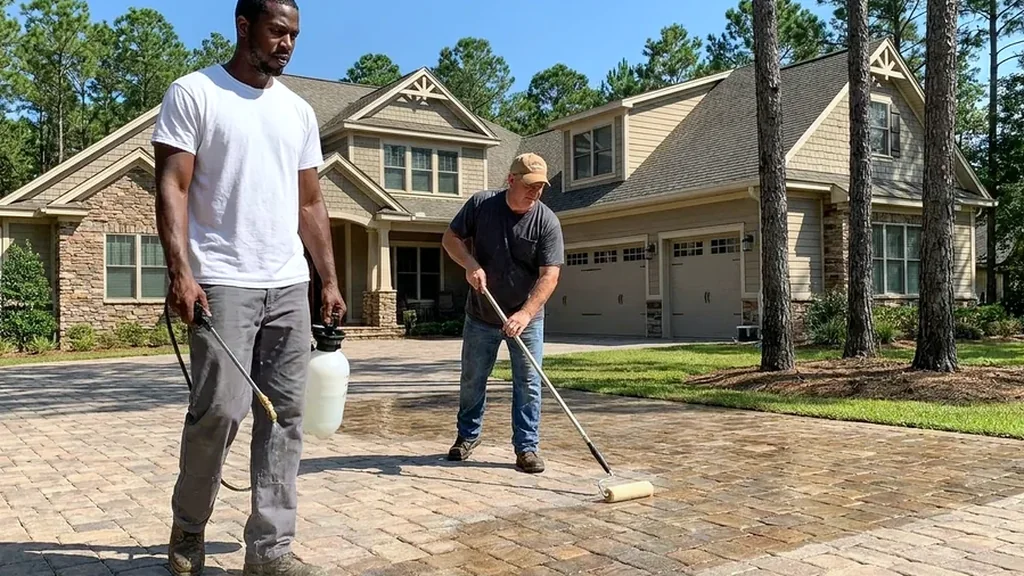
How does a paver sealing job work in Middleburg?
Measure and inspect the whole run
The contractor walks the full length of the drive, walkway and patio, since Middleburg lots are large and some sit a long way back from the road. A low spot usually means the base has washed out or packed down, and it is repaired before sealing. A long run of pavers has more edges, and edges are where settling shows first. Loose edges and settled sections are marked. Ask about any pavers installed in the last few months. Photos of problem spots help the contractor plan before arriving.
Check how new the pavers are
New pavers are checked for white mineral haze, which needs time to surface. One St. Augustine company says wait about 60 to 90 days, and a Jacksonville company says 30 to 60. Older pavers are tested for a past coat, since an old solvent-based layer would block a water-based one. That test sets the product choice. Changing from one finish to another later usually means stripping the old coat, so the first choice matters.
Wash and treat rust and stains
The surface is cleaned of green film, dirt and stains, and rust or oil spots are pre-treated. Iron in irrigation water is the usual cause of orange marks, and on a large lot the sprinkler lines can reach far from the house. Some embedded stains may remain after treatment, and the contractor will tell you which ones before the coat goes on. Pressure stays moderate so the joint sand is not blasted out, which is why paver guides advise a low setting. A gentle approach also protects the paver surface from wearing away.
Re-sand and let the surface dry
Silica sand is brushed back into the joints. One manufacturer bulletin says most of its sealers need the surface to dry 24 hours after cleaning or rain, and 24 hours of dry weather after application. Irrigation stays off for that time. Plan the job around a dry stretch. Keep cars and foot traffic off until the contractor says the surface is ready.
Spray, back-roll and wait
A sealer maker's bulletin says spray and back-roll suits most products, with a low-pressure sprayer setting the rate and a roller evening out extra. Excess left to dry can cause mottling or cloudy areas. Companies quote different waits, from a few hours to 24 hours for feet and one to two days for cars. Ask for the time on your product, and keep cars off until then.
Complete paver services in Middleburg
On a Middleburg lot the wash and drying take most of the day, since drives run long. Fresh sand goes in next and the sealer last, which keeps dirt out of the coat and keeps a dip from being sealed over. To hear how long your lot would take, call (904) 204-0884.
Driveways here are often long, walkways run from the street to the door, and some homes add a patio or pool deck. Each one wears differently, since tires, sun, shade and sprinkler spray all matter. To share which surfaces you want done, ask for a free estimate.
Sealer choice depends on the old coat and the look you want. A water-based top coat will not go over solvent-based sealer, and new pavers may need weeks to cure before any coat. Matte hides wear in tire paths, while a wet look deepens color but shows scuffs sooner. Call (904) 204-0884 to talk through the choice.
Timing follows the weather. Jacksonville's rain averages 53.4 inches a year, with most coming in summer storms, and sealer needs a dry surface and dry hours afterward. A week in the cooler season often goes smoothly, though any date can slip. To find a day that fits, ask for a free estimate.
Questions to ask before you hire
- Can you lift the leaf and tannin stains that oak trees leave behind?
- How long do the pavers need to dry after the wash before the sealer goes on?
- Who from your company will be working at my house that day?
- When is payment due, and which forms of payment do you take?
- How long will the coat hold up on a driveway I park on every day?
- Do I need to be home while you work, or only for the final walk through?
- Will you reset any pavers that have sunk or rock loose before you seal?
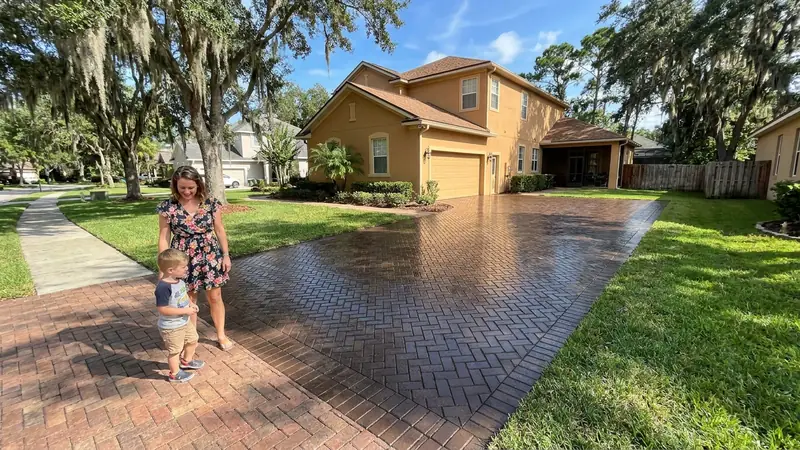
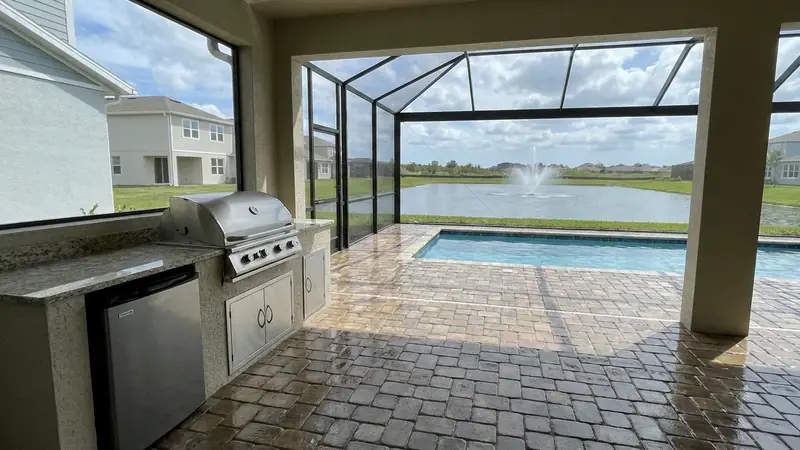
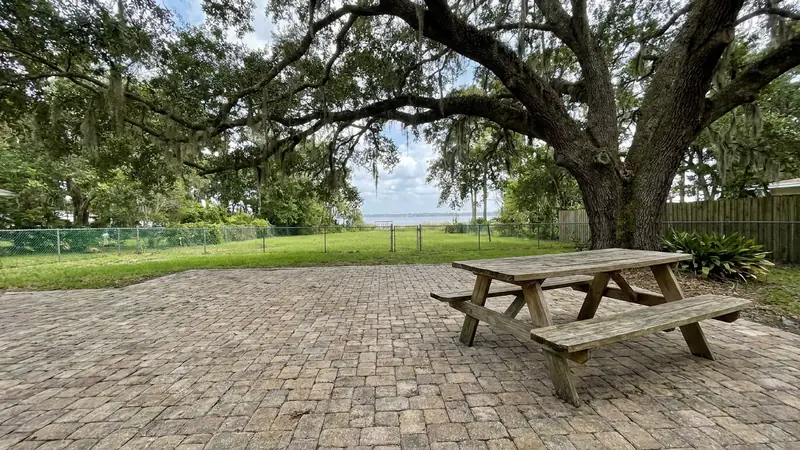
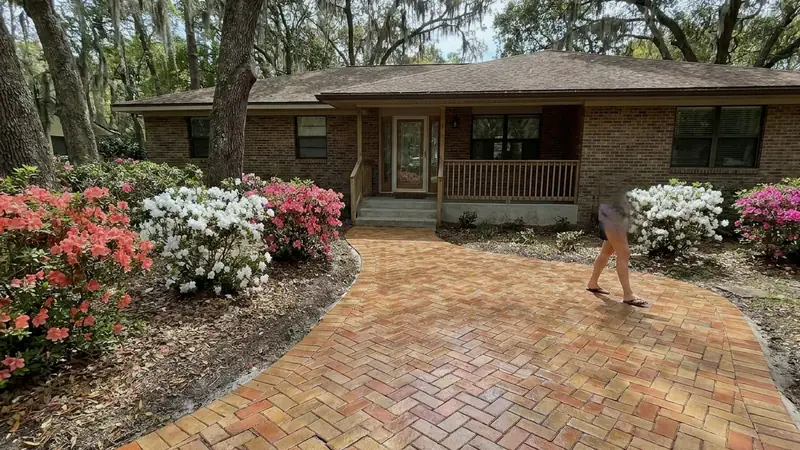
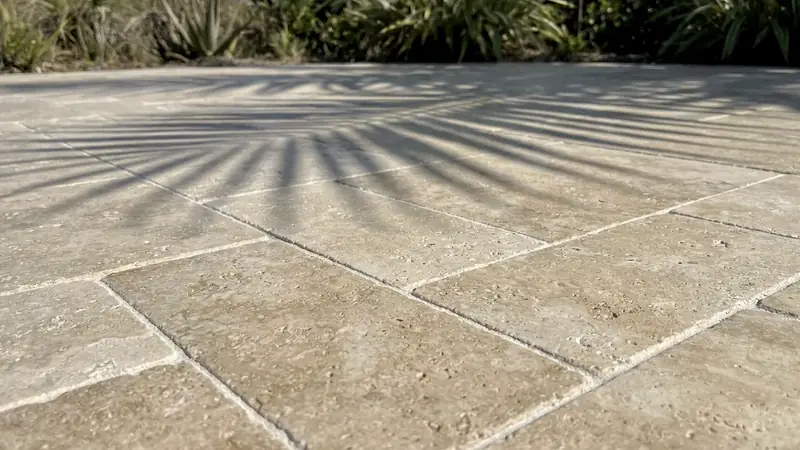
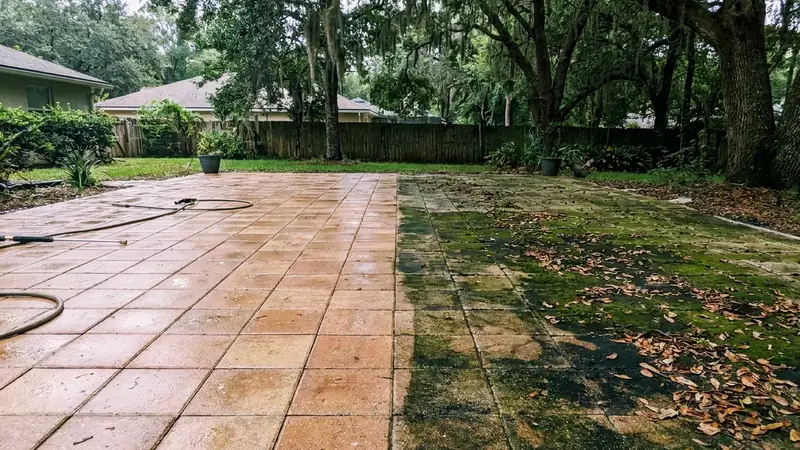
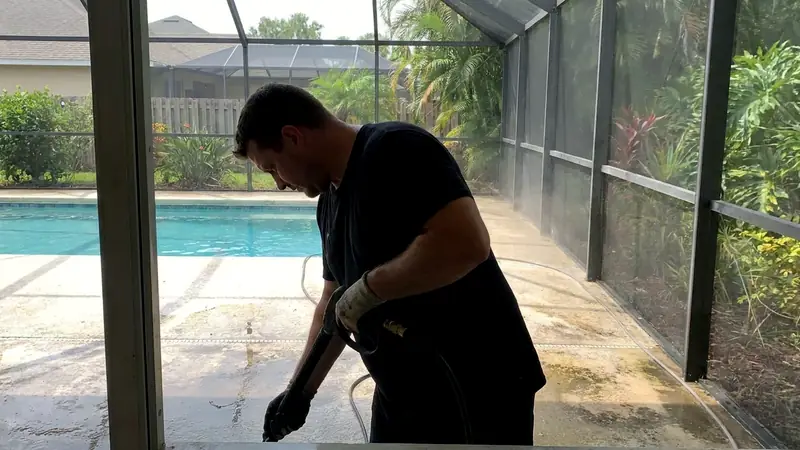
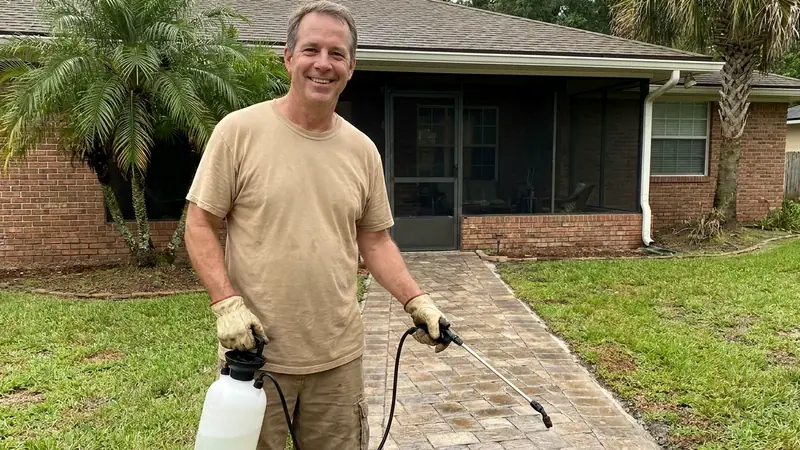
What do sealed pavers look like around Middleburg?
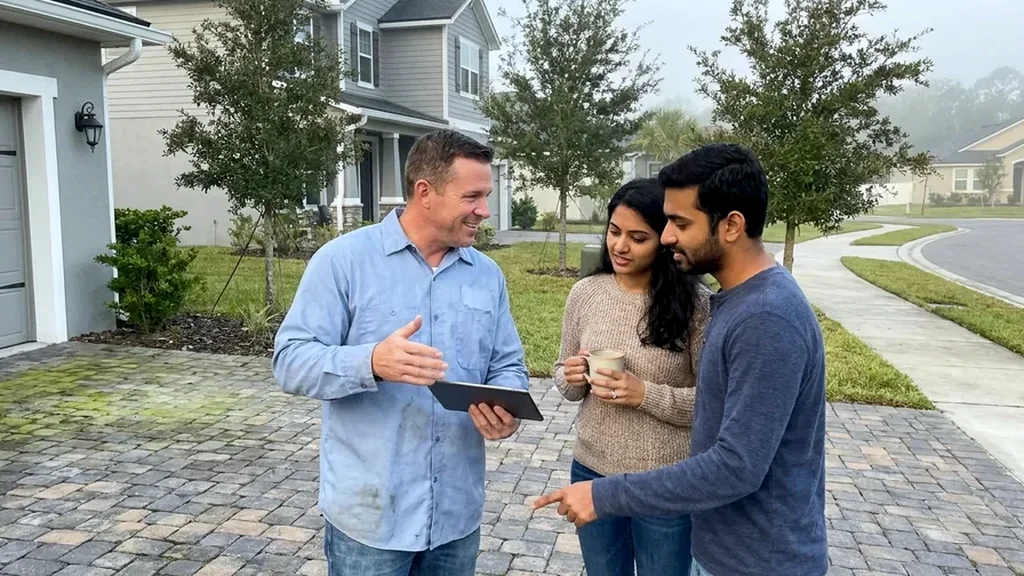
Why local matters in Middleburg
A contractor who works western Clay County knows the main roads, from Blanding Boulevard to County Road 218, and how far a drive can run from the street. That helps with a realistic estimate of time and materials. Someone based in town may not plan for a long run, and may quote by the house instead of by the square foot. To speak with a contractor who works Clay County, call (904) 204-0884.
Local knowledge also covers well water and sandy ground. A contractor who works here expects iron streaks and sand loss and arrives with the right treatment, instead of finding out on the day. That keeps the job on schedule. You can ask for a free estimate and mention where your water comes from.
Storm history matters near Black Creek. After Irma in 2017 about 1,200 homes were in the flooded area, so a local contractor asks about past water before sealing. That question changes how much washing and sand a job needs. If your lot took water, call (904) 204-0884.
What should a contractor know about Middleburg's creek and main roads?
Middleburg started as a ferry crossing on Black Creek in the 1820s, first called Clark's Ferry and later Garey's Ferry. In 1851 Garey's Ferry and Whitesville merged into Middleburgh, and the town served as Clay County seat from 1858 to 1874. The Clark-Chalker House on Main Street dates to 1835. If you live near the historic district, ask for a free estimate.
Black Creek is a blackwater stream with a basin of 474 square miles, about two thirds of Clay County, and its North and South forks meet near Middleburg. Jennings State Forest on Long Horn Road lies along the North Fork, and the surrounding wildlife management area covers nearly 24,000 acres. Blanding Boulevard runs 13 miles northeast toward Orange Park. Call (904) 204-0884 and say which of these you are nearest.
Frequently Asked Questions
Why does paver sealing cost so much in Middleburg?
Most of the bill is labor: washing, new joint sand, drying time and a two-step coat. Middleburg drives run long, since lots here are larger than those in Orange Park or Fleming Island, and that adds hours. The sealer is the smaller share.
What water-based paver sealer works for a Middleburg driveway?
The contractor picks after a look at the pavers and the old coat. Choices run from matte to wet look, and matte hides tire wear. A solvent-based coat underneath rules out a water-based one.
How long does paver sealing last on a long Middleburg drive?
Two to five years per coat is the span companies quote. Wheel paths wear sooner than patios, and shaded walks last longer. Beading water says the coat still works, while water that soaks in says it is finished.
How much does it cost to seal outdoor pavers in Middleburg?
Prices published for a clean, sand and seal run $1.75 to $3.25 per square foot. Larger lots add area, and stripping an old coat, treating rust or working on travertine raises a quote. A written total with the measured area helps you compare.
How often should pavers be sealed in Middleburg?
Every two to five years is the usual range. Full-sun drives sit at the short end and shaded walks at the long end. Water that beads each spring shows where yours stands, and a recoat before the surface is bare is easier than stripping a failed one.
Can well water stain my Middleburg pavers?
Yes, since iron is common in Florida well water and spray from irrigation leaves orange streaks. Rust gets treated in the wash, though a deep stain may linger faintly. Aim spray heads off the pavers and move metal furniture off the surface before the visit.
How soon can new Middleburg pavers be sealed?
Wait for the first coat, since sealing too early can trap haze, and new homes along Tynes Boulevard and County Road 218 are the usual case. One St. Augustine company says about 60 to 90 days and a Jacksonville company says 30 to 60, so that white mineral haze can surface. Give the contractor your install date.
Can Middleburg pavers be sealed after Black Creek flooding?
Yes, once they are washed clean and fully dry, which can take a few extra days after a flood. Floodwater leaves dirt that sealer would trap, and lost joint sand has to be replaced. Tell the contractor if your lot took water during Irma or a later storm.
Ready for a Free Estimate in Middleburg?
Call (904) 204-0884 and tell us about your pavers.
Free, no obligation